Artificial Intelligence: The Brain Behind the Future
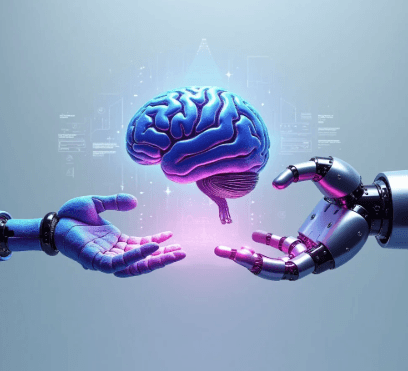
Artificial intelligence encodes core human cognition—learning, reasoning, perception—into systems that turn data into action. This framing clarifies the boundary between automation and intelligence, while highlighting data pipelines that translate inputs into insight. Models must be robust and interpretable enough to generalize across contexts, yet efficient for real-world use. The potential across industries is substantial, but governance, privacy, and bias require careful attention. The conversation now turns to how these factors shape responsible, scalable progress.
What AI Is and Why It Matters Today
Artificial intelligence (AI) refers to systems that simulate aspects of human cognition—such as learning, reasoning, and perception—through computational methods.
The topic clarifies boundaries between automation and intelligence, assesses societal relevance, and outlines practical implications for decision making.
Its significance stems from potential efficiency, ethical considerations, and governance needs, inviting debate about transparency and exploring biases to foster informed, liberated engagement with transformative technologies.
How AI Learns: From Data to Decisions
How do machines move from data to decisions? In learning systems, data pipelines transform raw inputs into structured representations suitable for modeling. Algorithms extract patterns, calibrate parameters, and iteratively refine predictions.
Emphasis rests on model generalization: capabilities to perform well on unseen data. This disciplined process balances learning efficiency with robustness, enabling autonomous inference while preserving interpretability and freedom in design choices.
Real-World AI: Impact Across Industries
The deployment of real-world AI systems now expands beyond laboratories into diverse sectors, translating abstract models into tangible value at scale. Across industries, analyses reveal operational efficiency gains, risk mitigation, and decision support, yet challenges persist. Privacy breaches and bias remediation emerge as critical focus areas, demanding rigorous governance. The trajectory remains exploratory: empirical validation, scalable deployment, and continual refinement, guided by transparent measurement and freedom-centered design.
Navigating Ethics, Safety, and Responsibility in AI
As AI systems become embedded in critical decision-making, stakeholders must address ethics, safety, and responsibility through explicit frameworks that bridge technical capability with societal values. The discussion maps governance to practice, examining privacy risks and accountability gaps, while framing metrics, redress, and whistleblower paths. A disciplined, open-ended inquiry is essential to balance innovation with human-centric restraint and accountability.
Frequently Asked Questions
What Are Ai’s Fundamental Limitations and Blind Spots?
AI’s fundamental limitations include context sensitivity, ambiguity, and data dependence, with blind spots in common sense, causality, and long-term implications. It raises AI ethics concerns and data privacy risks, demanding rigorous evaluation, transparent governance, and freedom-centered methodological safeguards.
How Is AI Creativity Measured and Verified?
Creativity in AI is measured via creativity benchmarks and verification protocols, applying standardized tasks, originality scoring, and reproducibility checks; it is analyzed skeptically, acknowledging contextual limits, potential biases, and the need for transparent criteria appealing to exploratory audiences.
Can AI Possess True Autonomy or Consciousness?
“Truth be told,” the analysis concludes: AI cannot possess true autonomy or consciousness. Still, autonomy ethics and consciousness implications arise as systems exhibit self-directed behavior, challenging frameworks, while transparency and accountability remain essential within evolving governance and design practices.
What Roles Do Bias and Fairness Play in AI Outcomes?
Bias and fairness shape AI outcomes by guiding evaluation, adjustment, and accountability. They rely on bias mapping and fairness audits to reveal hidden disparities, enabling iterative improvements and safeguarding autonomy, transparency, and freedom in responsible AI deployment.
See also: Are We Ready for Fully Connected Living?
How Will AI Reshape Human Job and Education Needs?
AI will reallocate roles through automation and upskill demand, reshaping work and classrooms; AI literacy and lifelong learning become essential, enabling adaptable colonies of creativity. Analysts assert ongoing study sustains sovereignty, while societies assess asymmetries and opportunities.
Conclusion
AI systems increasingly mirror core human cognition, translating data into actionable insight while balancing efficiency with interpretability. Their real-world impact spans risk, productivity, and decision support, yet governance must tame privacy concerns and bias through transparent metrics and accountable practices. Like a compass guiding exploration, robust frameworks orient progress toward trustworthy, human-centric innovation. In this evolving landscape, rigorous evaluation, ethical foresight, and prudent deployment remain essential to ensure AI augments rather than obscures human judgment.