
Cedar vs Heat-Treated Hemlock for a Barrel Sauna
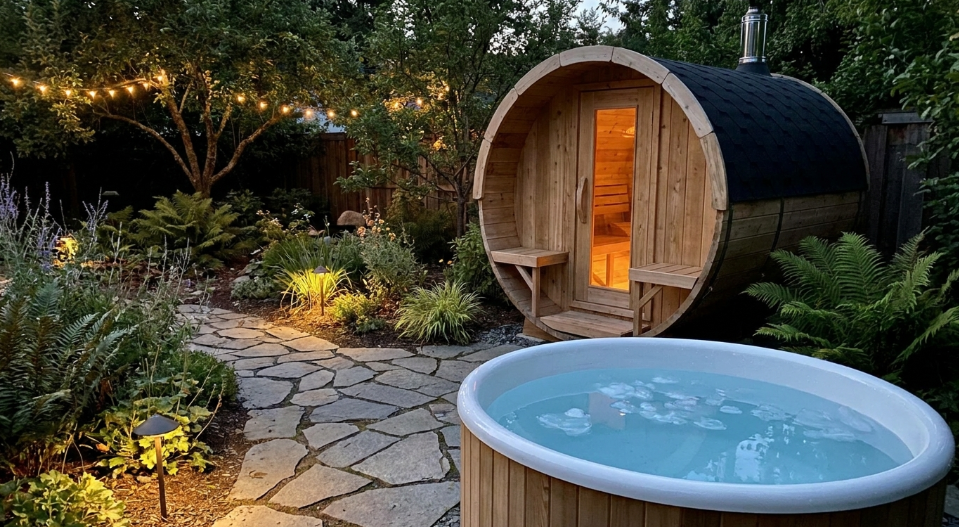
Cedar and heat-treated hemlock are the two staves most barrel sauna makers offer, and the choice comes down to how much of a premium a buyer will pay for cedar’s longer outdoor lifespan versus hemlock’s lower cost and comparable indoor performance. Cedar typically costs 20 to 35 percent more for a comparable barrel shell but resists rot and holds its stave-to-stave seal longer outdoors. Heat-treated hemlock costs less and works well for a barrel kept out of harsh weather, though it needs more frequent sealant to match cedar’s outdoor durability. Here is how the two actually compare once stave construction, not flat panels, is the build method in question.
1. How Each Wood Handles the Curve
Barrel staves are milled with a slight curve and a beveled tongue-and-groove edge so they lock into a round wall under hoop tension, and both cedar and heat-treated hemlock machine cleanly to that curved profile without a meaningful difference in workability. Where they start to differ is in how consistently the curve holds after machining. Cedar’s straighter, more uniform grain tends to hold its milled shape with less warping over the barrel’s first year, while hemlock, even after heat treatment, can show slightly more variation stave to stave depending on how the log was cut.
2. Which Wood Seals the Stave Joints Better
Barrel construction relies on the wood itself swelling slightly once it absorbs humidity to close the small gaps between staves, since there is no caulk or gasket at these joints. Cedar’s natural oils slow moisture absorption at first but the wood still swells enough over the first several uses to seat properly against its neighbors. Heat-treated hemlock absorbs moisture a bit more readily due to the kiln process altering its cell structure, which some barrel builders say helps it seal slightly faster in the first few weeks, though the long-term seal quality between the two is comparable once both have fully seated.
3. Scent Inside a Round Cabin
Cedar’s aromatic oils are especially noticeable in a barrel’s tighter, more enclosed curved space, where the scent circulates around the rounded ceiling rather than escaping into flat corners. Heat treatment mutes hemlock’s natural resin content as a side effect of the drying process, so a hemlock barrel has a noticeably lighter, less woody smell. Buyers who specifically want the classic aromatic barrel sauna experience tend to lean cedar for this reason alone, separate from any durability consideration.
4. Price Difference on a Full Barrel Shell
Because a barrel uses more linear feet of milled stave per unit of interior space than a flat panel wall does, the cedar-versus-hemlock price gap shows up more visibly on a full shell than it might on a smaller flat-panel accessory. A 6-foot diameter cedar barrel shell typically runs $4,200 to $5,800, while a comparable hemlock shell runs $3,200 to $4,400. That gap widens somewhat on larger diameters, since bigger barrels simply use more staves.
5. Weather Resistance on the Curved Exterior
A barrel’s round exterior is exposed to sun and rain across its full circumference rather than on flat, distinct walls, which makes weather resistance matter more evenly across the whole surface. Cedar generally holds up two to three years between sealant applications outdoors, while heat-treated hemlock on a barrel typically needs resealing every twelve to eighteen months to match that level of protection, particularly on the arc of the exterior that gets the most direct sun through a normal day.
6. Hoop Tension and Wood Movement
Because barrel construction depends on hoop tension to keep staves seated, how much a wood species shrinks and swells with the seasons affects how often hoops need checking. Cedar’s more dimensionally stable grain tends to need less frequent hoop adjustment over a year. Heat-treated hemlock, while more stable than untreated hemlock, can still move slightly more with humidity swings, which means a hemlock barrel owner may want to check hoop tension a bit more often during seasonal transitions, roughly three or four times a year instead of two.
8. Sourcing and Regional Availability
Western red cedar is grown and milled predominantly in the Pacific Northwest and parts of western Canada, which can add modestly to freight cost for buyers on the opposite coast compared with a hemlock supply chain that draws from a broader range of regional mills. That freight difference is usually a smaller factor than the base material cost gap between the two woods, but it is worth asking a seller where their stock actually ships from, since a barrel advertised at a competitive price with freight added from across the country can end up costing more delivered than a slightly pricier option milled closer to home.
7. Which Wood Fits Which Buyer
Cedar makes the most sense for a barrel sitting in full weather exposure for a decade or more, and for anyone who specifically wants the strongest, longest-lasting aromatic experience. Heat-treated hemlock makes sense for a buyer on a tighter budget who is comfortable checking hoop tension a little more often and reapplying sealant on a shorter cycle. Buyers comparing both wood options side by side, along with hoop and roof specs for each, can look through the SweatDecks catalog, which lists species and stave thickness per model rather than using vague language like “solid wood construction.”
What Does the Research Say About Wood Choice and Health Associations?
None of the available sauna research distinguishes outcomes by stave species or barrel construction, since the studies track sauna use broadly rather than the wood a unit is built from. A 2018 review in Mayo Clinic Proceedings and a separate 2001 review in The American Journal of Medicine both describe cardiovascular associations tied to regular sauna bathing generally, independent of build material. What wood choice actually changes is how long the barrel lasts and how much upkeep it needs, both of which influence whether the sauna stays in reliable enough condition for someone to keep a routine going for years.
Frequently Asked Questions
Is cedar or hemlock better for a barrel sauna specifically? Cedar holds its curve and seal longer outdoors with less frequent sealant and hoop adjustment. Heat-treated hemlock costs less and performs well with a slightly shorter maintenance cycle.
Does heat-treated hemlock seal as well as cedar in stave construction? Yes, once fully seated. Hemlock can even seal slightly faster in the first few weeks since it absorbs moisture a bit more readily.
Why does a barrel sauna’s wood choice affect hoop tension? Wood that shrinks and swells more with humidity changes stave fit more, which means the hoops holding everything together need more frequent tension checks.
How much more does a cedar barrel sauna cost than hemlock? Roughly 20 to 35 percent more for a comparable diameter shell, with the gap widening somewhat on larger barrels.
References
- Cardiovascular and Other Health Benefits of Sauna Bathing: A Review of the Evidence, Mayo Clinic Proceedings, 2018
- Benefits and risks of sauna bathing, The American Journal of Medicine, 2001
- Does the Combination of Finnish Sauna Bathing and Other Lifestyle Factors Confer Additional Health Benefits? A Review of the Evidence, Mayo Clinic Proceedings, 2023